
Earlier, finance ministry officials had said sovereign bonds could address the financing problems of the CAD and the infrastructure sector.

The central bank also asserted that the country is ready for the tapering of the US Federal Reserve's bond purchases.
The West Bengal state government has delayed project approvals. And now, the IT giants may look at other states as the centre is thinking of giving sops to SEZs

Both the government as well as the RBI took a series of steps to curb imports of gold and other non-essential items in addition to increase foreign exchange inflows.

The Union government's fiscal deficit further widened to Rs 9.53 lakh crore, which is nearly 120 per cent of the annual budget estimate, at the end of October of the current financial year, according to official data released on Friday. The deficit widened mainly on account of poor revenue realisation. The lockdown imposed to curb spreading of coronavirus infections had significantly impacted business activities and in turn contributed to sluggish revenue realisation.

A high import of the metal is putting pressure on current account deficit.

Expectations that various sectors and the common man is eyeing in this budget.

In Jan the country raised the import tax on the yellow metal by 2 percentage points.
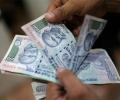
Strength in dollar against some other currencies overseas weighed on the rupee

In august last year, the government had raised import duty on gold and silver to 10 per cent to curb the surging imports and burgeoning CAD.
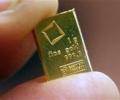
Traders had accumulated stocks when the FM hinted of a duty hike.
India's economic condition is just a notch above that of Greece. The next phase could be of a "sovereign default" similar to Greece, said Arun Jaitley, Leader of Opposition in Rajya Sabha.

Speaking at a roadshow in Frankfurt on investment opportunities in India on Monday, the Minister said the economy was on the right path to achieve growth levels recorded during 2004-2008.
Some are eying the competitive markets abroad.
Declining value of the rupee, widening Current Account Deficit (CAD) and the impact of likely tapering of US bond purchases are some of the key issues which will keep Raghuram Rajan busy.
Currency market participants do not expect the rupee to slide immediately but feel a sharp rise is unlikely because of month-end dollar demand from importers.
The 30-share Sensex ended up 203.97 points to trade at 18,516.91 and the 50-share Nifty rose 63.30 points at 5,471.75 levels.
The broader markets gained with mid-caps and small-caps rising 0.7-0.9 per cent on the BSE.
So what are the reasons for the bloodbath in the markets? And how it affects you.

International oil prices retreated from an over seven-year high but was still above $100 a barrel and continue to pose threat to India's inflation rate and current account deficit. While there are no supply concerns as the oil route remained open, consumers will feel the pinch when PSU oil firms start passing on the increase in international rates through a revision in petrol and diesel prices, which have been on a pause for over three-and-a-half-months in view of elections in Uttar Pradesh and four other states. The government is "closely monitoring the situation" and will "take appropriate steps as and when required", a top official said. Brent crude oil surged past $105 per barrel on Thursday for the first time since August 2014, following Russia's invasion of Ukraine.
The 30-share Sensex ended lower by 291 points to 18,308 and the 50-share Nifty dropped 93 points to 5,415.
The 30-share Sensex ended lower by 291 points to 18,308 and the 50-share Nifty dropped 93 points to 5,415.
"We are one of the very few emerging economies in the world that has a current account deficit. That is because nobody wants to start an industry in India," says Dilip Kapur, Founder, Hidesign.

The move comes in the backdrop of a slowdown in the foreign direct investments and its impact on the current account deficit.
The Union Budget for 2011-12 comes at a critical juncture for the economy -- high inflation, tight liquidity, elevated fiscal and current account deficits, and a slowdown in the reform process have taken away the sheen from the India growth story.
The upsurge was further supported by a firming global trend.

India's CAD had touched a record high of 4.2 per cent of GDP in 2011-12, on the back of a wider trade gap and lower capital inflows.

Apple's ambitious strategy to expand iPhone exports, shift more production from China to India at a faster pace, and grow its domestic market hits a Trump-sized roadblock.

The large current account deficit and the growing vulnerability on the external front have largely contributed towards the secular decline and the current volatility of the rupee.
Recent measures by the Reserve Bank of India and the Securities and Exchange Board of India are being seen by observers as an attempt to reverse the inexorable decline of the rupee.

The report said in the recent months policy makers as well as the private sector have made some efforts to improve productivity.
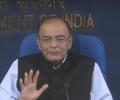
Finance ministry tells PM fiscal deficit target will be met, capex expenditure won't be cut and GDP growth will surpass 7.5%.
The central bank said the restrictions would also apply to imports of gold which do not have a fixed price.
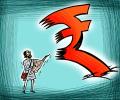
The rupee appreciated 7 paise to 79.74 against the US dollar in early trade on Thursday as a positive trend in domestic equities supported the local unit. However, a strong American currency overseas and forex outflows restricted the rupee's gain, dealers said. At the interbank foreign exchange, the rupee opened at 79.72 against the American dollar, then went lower to trade at 79.74 against the greenback in early deals, registering a gain of 7 paise over the last close.
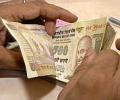
The rupee should be allowed to find its own level, says analyst Anil Bhansali.
The price of gold in India shot up 2.3 per cent in the past week.
Gold prices on Friday rose by Rs 210 to hit another five-week high of Rs 28,300 per 10 grams in the national capital on sustained buying by stockists amid a firming global trend.

FM feels it will help to bring down imports.
The rupee had lost 21 paise to end at new 10-month low of 56.38 against the dollar on Thursday on fag-end spurt in dollar demand after RBI Governor D Subbarao painted a dim macroeconomic picture.

Lower crude prices and dip in gold demand will push the CAD down.
 © 2026 Rediff.com - Advertise with us - Disclaimer - Privacy Policy - Sitemap - Feedback - About us - Terms of use - Grievances